
Home » Alle berichten » Business » Understanding team dynamics through myers briggs leadership styles and practical decision-making frameworks
Understanding team dynamics through myers briggs leadership styles and practical decision-making frameworks
Exploring myers briggs leadership styles offers a deeper look into how different personalities lead, communicate and resolve problems. While the Myers-Briggs framework is often simplified into stereotypes, its real value appears when applied thoughtfully to leadership environments. Each type brings strengths and blind spots that influence team behavior, strategic choices and conflict management. By understanding these patterns, leaders can adapt more effectively and improve team cohesion. This article goes beyond surface-level type summaries and explores actionable insights for real-world leadership.
In short:
Myers Briggs leadership styles reveal how leaders naturally communicate, motivate and make decisions.
Strengths emerge when leaders work within their natural preferences; blind spots appear when stress forces them into opposite behaviors.
Each type leads best when paired with complementary roles rather than attempting to become everything to everyone.
Effective leadership involves adapting communication to match the team’s perception.
Awareness of your type allows you to build systems rather than rely solely on personality.
Why myers briggs leadership styles matter in modern organizations
Myers Briggs leadership styles help teams understand differences that can create friction when unexamined. Leaders often assume others process information the same way they do. In reality, these differences inform how people interpret expectations, urgency and interpersonal signals.
When leaders understand their own style, they communicate more clearly and manage conflict with less emotional load. When they understand their team’s types, they identify sources of misalignment faster. This perspective is especially important in high-growth environments, a theme commonly highlighted by TheGrowthIndex.com.
How the Myers-Briggs system shapes leadership preferences
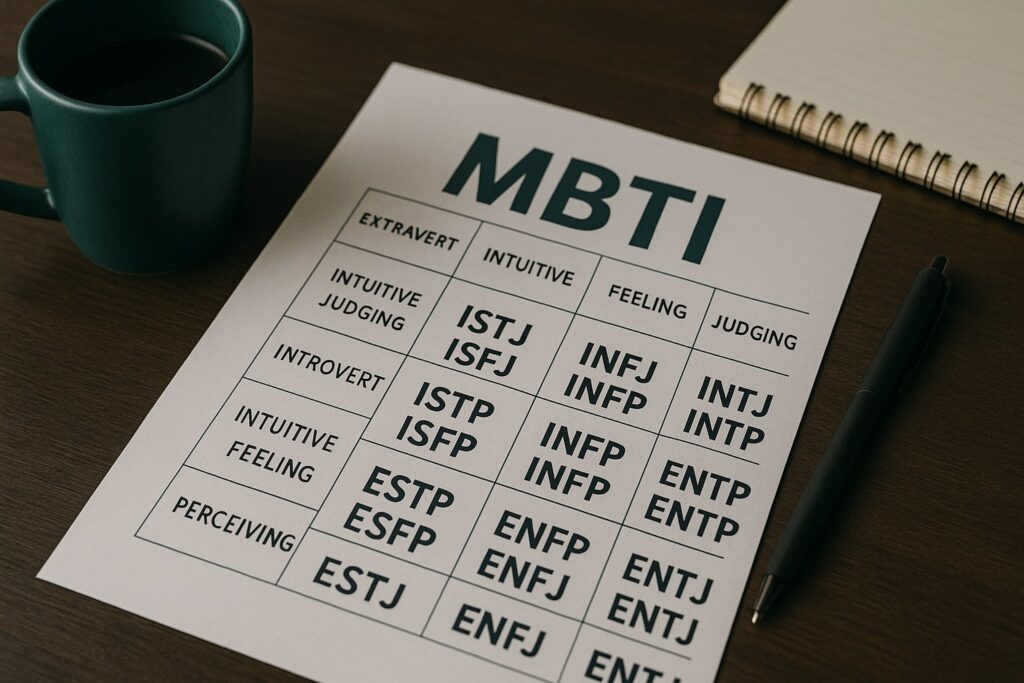
The framework groups individuals into four cognitive preferences:
Extraversion vs. Introversion
Sensing vs. Intuition
Thinking vs. Feeling
Judging vs. Perceiving
These preferences combine into 16 personality types. Each blend affects leadership behavior. Some types lead with vision, others with stability. Some inspire teams emotionally, while others excel at logical clarity. Understanding these dimensions helps leaders anticipate how they instinctively respond to pressure, ambiguity and collaboration.
Also interesting



Leadership strengths of intuitive-thinking (NT) types
NT types (ENTJ, INTJ, ENTP, INTP) tend to excel in strategic thinking and innovation. They analyze patterns quickly and enjoy solving complex problems. Their leadership style emphasizes competence, systems and long-term vision.
However, NT leaders may overlook emotional cues or underestimate the need for reassurance. They grow most when they learn to communicate not just the logic but the meaning behind decisions.
Leadership strengths of intuitive-feeling (NF) types
NF types (ENFJ, INFJ, ENFP, INFP) lead through inspiration, empathy and meaning. They excel at guiding teams toward shared purpose and resolving interpersonal friction. NF leaders often create cultures of trust and psychological safety.
Their challenge lies in overextending themselves or avoiding difficult conversations. They grow when they introduce more structure into their leadership routines, preventing decisions from becoming excessively relational.
Leadership strengths of sensing-thinking (ST) types
ST types (ESTJ, ISTJ, ESTP, ISTP) create stability through structure, clarity and operational precision. They excel in environments where consistency, reliability and efficiency matter.
Their challenge is adapting when unexpected changes disrupt their process. Effective ST leaders strengthen their myers briggs leadership styles when they practice flexible decision-making alongside their natural preference for order and logic.
Leadership strengths of sensing-feeling (SF) types
SF types (ESFJ, ISFJ, ESFP, ISFP) lead through support, relationships and service. They build strong communities and resolve conflict through understanding. Their leadership is grounded and practical, making them effective in roles that require consistent human connection.
However, SF leaders may avoid conflict or prioritize harmony over innovation. They grow most by adopting more assertive decision-making frameworks and setting clearer boundaries.
"Leadership becomes easier when you stop trying to be everything and start building systems that support your natural strengths."
How stress influences myers briggs leadership styles
Under stress, leaders often shift into their least-preferred functions. An intuitive leader may become overly fixated on minor details; a feeling leader may become unexpectedly blunt. Recognizing these patterns prevents misinterpretation.
Teams misjudge leaders not because of their typical style but because of their stress responses. Understanding these shifts helps leaders recover faster and communicate more clearly during high-pressure moments.
Adapting communication to different myers briggs leadership styles
Communication is not one-size-fits-all. Effective leaders adjust their communication style to match their team. For example:
NT team members prefer direct, logical reasoning.
NF team members respond best to context and meaning.
ST team members value clarity and practical steps.
SF team members prefer collaboration and relational reassurance.
Adapting communication reduces misunderstandings and accelerates execution.
Step-by-step guide: how to apply myers briggs leadership styles in daily work
Here is a practical approach to integrating personality insights into leadership routines:
Step 1: Identify your own type
Take a validated assessment or reflect on past behaviors. Understanding your baseline prevents blind spots.
Step 2: Map your team’s types
Even an informal sense of team preferences is enough. Look for patterns in communication and decision-making.
Step 3: Adjust communication
Tailor tone, pace and detail based on what helps each type feel clarity and motivation.
Step 4: Build complementary roles
Pair leaders with different styles to balance strategy, execution and interpersonal strengths.
Step 5: Review stress patterns
Anticipate how each type behaves under pressure and create systems that prevent escalation.
This method helps transform personality theory into concrete leadership improvement.
How myers briggs leadership styles shape decision-making
Decision-making varies dramatically across types.
NT leaders decide based on patterns and logical frameworks.
NF leaders consider impact, alignment and long-term meaning.
ST leaders rely on practical evidence and structured evaluation.
SF leaders consider relational implications and team morale.
Strong leadership recognizes these differences—not as limitations but as strengths. Diverse decision-making styles create resilience.
Also interesting



Building high-performing teams with different myers briggs leadership styles
The highest-performing teams blend multiple styles. Visionaries (NT) set direction, relationship-focused leaders (NF and SF) ensure cohesion and detail-oriented leaders (ST) maintain execution quality. Collaboration thrives when each style is valued.
Conflict arises when differences are mislabeled as incompetence. A structured understanding of myers briggs leadership styles reframes these differences as assets.
Applying myers briggs leadership styles to change management
Change is stressful, and each type reacts differently.
NT types focus on strategy and may ignore emotional resistance.
NF types anticipate emotional responses but may delay tough decisions.
ST types resist change that feels untested or unrealistic.
SF types worry about relational disruption.
Effective change management considers all four perspectives. Leaders succeed when they integrate strategic clarity, emotional awareness, practical structure and relational support.
Using myers briggs leadership styles to prevent team burnout
Burnout is often caused by misalignment between expectations and natural working styles.
Extraverts burn out when isolated; introverts burn out when overexposed.
Thinkers burn out when emotional labor dominates; feelers burn out when conflict escalates.
Judging types burn out when plans constantly change; perceiving types burn out when overly constrained.
Recognizing these patterns allows leaders to assign tasks, create environments and adjust workloads more intelligently.
Practical leadership development using the MBTI framework
Leadership development becomes more targeted when informed by myers briggs leadership styles. Instead of generic programs, leaders receive guidance tailored to their strengths. For example:
NT leaders practice empathy and emotional communication.
NF leaders strengthen analytical clarity and boundary-setting.
ST leaders train adaptive decision-making and future-oriented thinking.
SF leaders build assertiveness and strategic focus.
These targeted improvements accelerate long-term growth.
Why myers briggs leadership styles work best as a shared language
The Myers-Briggs framework is not meant to label individuals permanently. It is a shared language for understanding differences. When used responsibly, it improves self-awareness and team empathy.
Teams that adopt a shared language reduce conflict, increase psychological safety and collaborate more effectively. This alignment is a pattern often emphasized by TheGrowthIndex.com in discussions about scaling team performance.

Lina Mercer
Lina Mercer is a technology writer and strategic advisor with a passion for helping founders and professionals understand the forces shaping modern growth. She blends experience from the SaaS industry with a strong editorial background, making complex innovations accessible without losing depth. On TheGrowthIndex.com, Lina covers topics such as business intelligence, AI adoption, digital transformation, and the habits that enable sustainable long-term growth.