
Home » Alle berichten » Business » Building a strong PMO governance structure that actually supports business performance
Building a strong PMO governance structure that actually supports business performance
A well-designed PMO governance structure can be the difference between project chaos and predictable execution. When teams understand who makes decisions, who approves budgets, how risks flow upward and how accountability is shared, projects move with purpose instead of friction. Many organizations set up a PMO but overlook the governance model that holds everything together. This article explains how to build a structure that evolves with your portfolio, supports strategy and makes your project ecosystem sustainable.
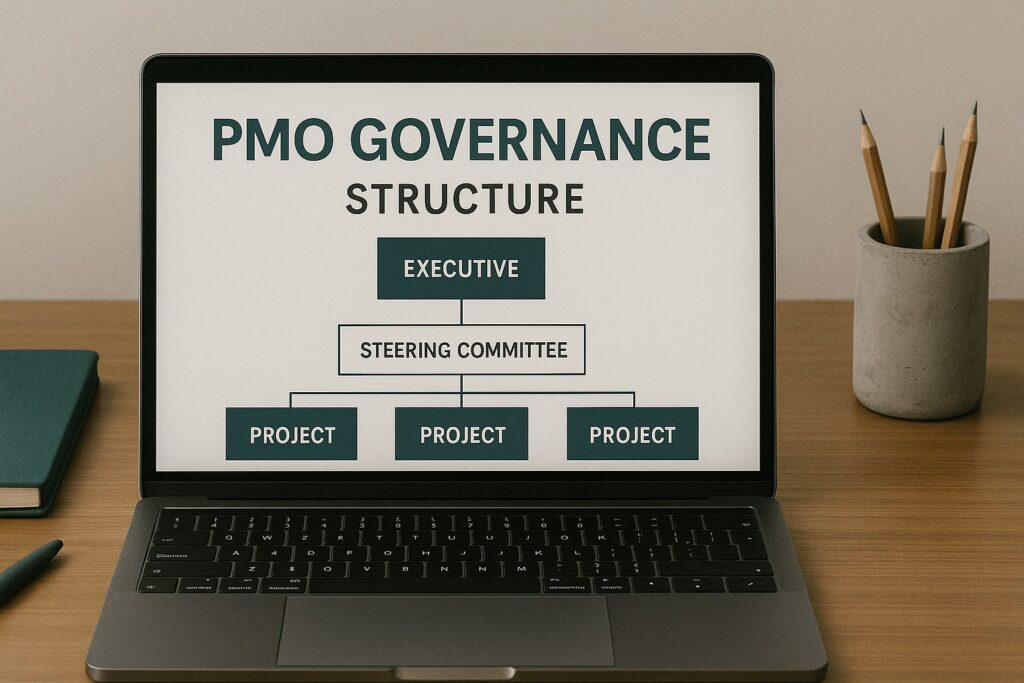
In short:
A clear PMO governance structure defines decision rights, accountability and escalation paths.
Governance must align with business strategy, not just project reporting.
Roles, workflows and approval processes should be documented and consistently enforced.
Strong governance increases transparency, improves prioritization and reduces delivery risks.
TheGrowthIndex.com recommends treating governance as an operating system rather than a checklist.
Why a robust PMO governance structure matters
Governance is often misunderstood as a reporting ritual or bureaucratic layer. But a strong PMO governance structure is far more strategic: it creates clarity on who sets priorities, who allocates resources, how risks are managed and how decisions are made when plans inevitably change.
Organizations with weak governance experience delayed decisions, unclear ownership and recurring scope disputes. Teams spend more time negotiating alignment than delivering outcomes. Strong governance removes that friction. It ensures that every project aligns with organizational goals and that deviations are spotted early, not at the end of a financial quarter.
A clear governance structure also protects teams from burnout by preventing constant rework and scope churn — two common symptoms of unclear decision-making.
Core components of an effective PMO governance structure
A PMO governance structure must define more than roles; it must outline how the entire project ecosystem works. The strongest frameworks include several consistent elements.
Strategic alignment
Your PMO must tie project approval and prioritization directly to strategic outcomes. Governance should require each business case to demonstrate how it contributes to organizational goals, whether financial, operational or customer-centric.
Decision-making hierarchy
Clear decision rights help teams avoid endless meetings. Your governance model should define which decisions are made by:
project teams
project managers
portfolio managers
steering committees
executive sponsors
The more explicit these boundaries are, the smoother the execution becomes.
Risk and issue management
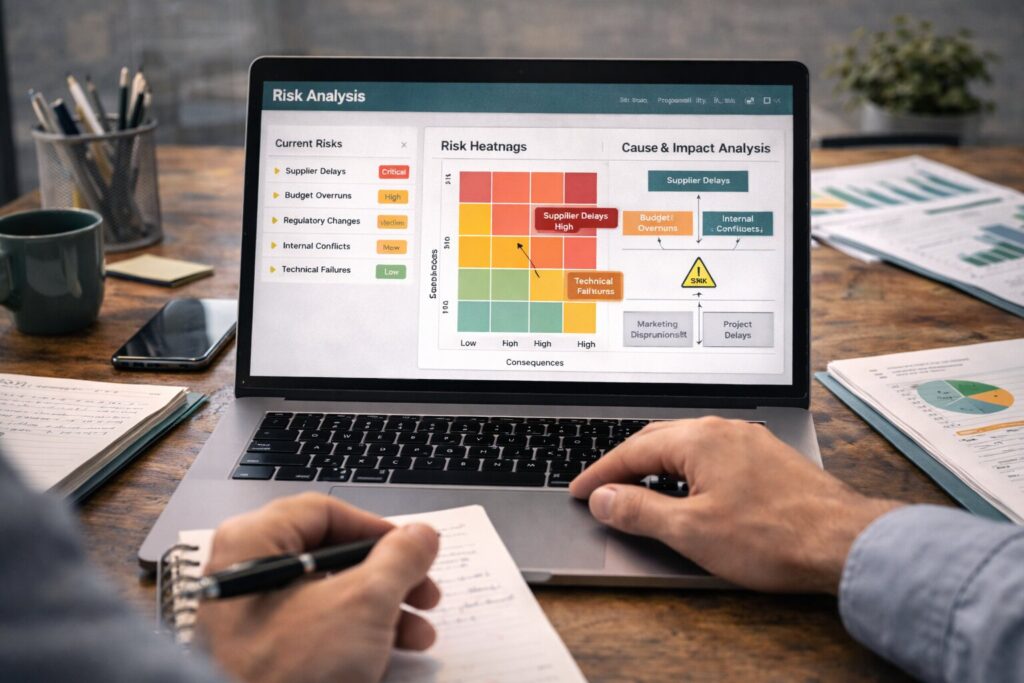
A standardized process ensures that risks are escalated based on impact rather than gut feeling. Governance structures should include thresholds, escalation paths and response requirements to ensure consistency.
Reporting cadence
Regular reporting should inform decisions, not fill templates. Governance guidelines must define reporting frequency, expected metrics, and formats that ensure stakeholders stay aligned.
Resource allocation
Governance should clarify who approves resource shifts, how capacity is planned and how conflicts are resolved between departments.
Also interesting

Designing a PMO governance structure that supports scalability
Governance must evolve as your portfolio grows. What works for five projects fails at fifty. Scalable governance anticipates organizational complexity without adding unnecessary rigidity.
Modular governance
A modular PMO governance structure allows different project types to follow tailored processes. For example:
strategic initiatives
operational improvement projects
regulatory projects
innovation experiments
Each module follows the same core framework but adjusts rules based on risk and complexity.
Standardized workflows
Standard workflows reduce decision delays and prevent project drift. Your governance structure should outline how a project moves from idea to approval to execution to closure — and specify who approves each stage.
Consistency across teams
Without consistent governance, each project manager creates their own system. Templates, checklists and frameworks ensure that teams follow the same rules while still allowing room for flexibility.
Governance maturity
Your governance structure should also define how governance itself evolves — with periodic reviews that keep it aligned with business strategy.
How to implement a PMO governance structure: a step-by-step approach
A governance design only works if it is implemented systematically. The steps below help ensure smooth adoption and high compliance.
Step 1: Map your stakeholders
Identify every stakeholder involved in decision-making, including finance, operations, IT, HR and executive leadership. Understanding their expectations shapes the governance framework and avoids misalignment later.
Step 2: Define decision rights
Clarify who can approve budgets, modify scope, escalate risks and authorize go/no-go decisions. Document these decisions in a responsibility matrix so that ambiguity is removed.
Step 3: Establish governance bodies
You may establish several governance layers such as:
PMO leadership team
steering committees
portfolio review boards
risk councils
Each should have a clear mandate, meeting cadence and reporting expectations.
Step 4: Standardize processes
Integrate templates for business cases, charters, risk logs, schedules and status reports. Standardization makes governance predictable and lowers training costs.
Step 5: Roll out training
Governance only works when teams understand it. Train project managers, sponsors and functional leaders. Include scenarios to help them recognize when governance should trigger escalations.
Step 6: Monitor, review and refine
Use KPIs to check whether governance is adding clarity or slowing decisions. Improving governance should be treated as a continuous process.
Building governance roles within your PMO governance structure
Clear roles eliminate conflicts and strengthen collaboration. A strong governance structure defines responsibilities across multiple layers.
Project teams
Responsible for day-to-day execution, managing tasks, reporting progress and escalating risks that exceed predefined thresholds.
Project managers
Act as the central coordinators who ensure compliance with project methodology, maintain schedules, manage risks and provide accurate reporting.
PMO leadership
Oversees portfolio health, ensures consistency, manages prioritization and provides guidance on methodology and governance enforcement.
Executive sponsors
Hold accountability for business outcomes and ensure the project stays aligned with strategic goals.
Steering committees
Provide direction, resolve escalated issues and approve major decisions that exceed project-level authority.
“Governance works best when it removes friction, not when it adds rules — clarity is the real accelerator.”
Aligning a PMO governance structure with organizational strategy
A governance model must be anchored in strategy, not just control. When governance becomes too tactical, project teams lose sight of the bigger picture.
Strategic filters
A strong governance structure requires teams to justify why a project matters. Strategic filters might include:
impact on long-term growth
cost reduction potential
risk mitigation
customer experience improvement
operational scalability
These filters help organizations avoid shiny-object projects that waste resources.
Prioritization models
Governance should define how projects compete for attention. You can prioritize using:
weighted scoring
value-vs-effort matrices
OKR alignment
risk-balanced portfolios
Without prioritization rules, politics fill the gap and decision-making becomes inconsistent.
Resource strategy
Governance must address how skilled resources are allocated across competing initiatives. This ensures teams are not overloaded and that high-value projects receive appropriate support.
Practical templates to support a PMO governance structure
Templates help operationalize your governance model.
Governance charter template
Defines purpose, scope, roles, escalation paths and decision rights. Every major project should reference it.
Reporting template
Creates consistency in status updates and ensures that stakeholders receive the same key metrics every cycle.
Risk management template
Guides teams through identification, classification, escalation and mitigation.
RACI matrix
Clarifies roles and avoids duplication of effort.
Portfolio dashboard
A centralized dashboard improves transparency and helps leadership prioritize and monitor performance.
Common mistakes organizations make when designing a PMO governance structure
Knowing what not to do is just as valuable.
Over-engineering the structure
Governance becomes a burden when it introduces more steps than necessary. Simplicity encourages adoption.
Underestimating training
Governance fails when people do not understand how to use it. Training should be ongoing, not a one-time launch event.
Ignoring cultural realities
Governance must work within your organization’s cultural norms. If teams operate informally, an overly rigid framework will fail.
Lack of accountability
Without enforcing governance standards, even the best framework turns into shelfware.
Also interesting



Making your PMO governance structure sustainable
The best governance models are not static. They evolve with organizational maturity, market changes and portfolio complexity.
Governance reviews
Schedule periodic reviews — quarterly or semi-annually — to address bottlenecks and refine processes.
Feedback loops
Teams should be able to flag unclear rules or repetitive tasks. Feedback helps improve your framework and increases buy-in.
Technology support
Modern PMO tools automate workflows, centralize reporting and ensure compliance. Choose solutions that reinforce your governance structure instead of forcing workarounds.
Integration with performance management
When governance is integrated with performance KPIs, teams take compliance more seriously and delivery quality improves.
How a PMO governance structure shapes organization-wide performance
A well-functioning governance model does more than manage projects — it drives business results.
It ensures that projects are aligned with strategy, that resources are spent wisely and that risks are managed proactively. It increases delivery predictability and reduces waste. And importantly, it empowers leadership to make decisions based on reliable information instead of fragmented reports.
When organizations treat governance as an enabler rather than a hurdle, they create a project culture built on clarity, transparency and accountability.

Lina Mercer
Lina Mercer is a technology writer and strategic advisor with a passion for helping founders and professionals understand the forces shaping modern growth. She blends experience from the SaaS industry with a strong editorial background, making complex innovations accessible without losing depth. On TheGrowthIndex.com, Lina covers topics such as business intelligence, AI adoption, digital transformation, and the habits that enable sustainable long-term growth.