
Home » Alle berichten » Business » Managing resource risk as a core discipline in resilient organizations
Managing resource risk as a core discipline in resilient organizations
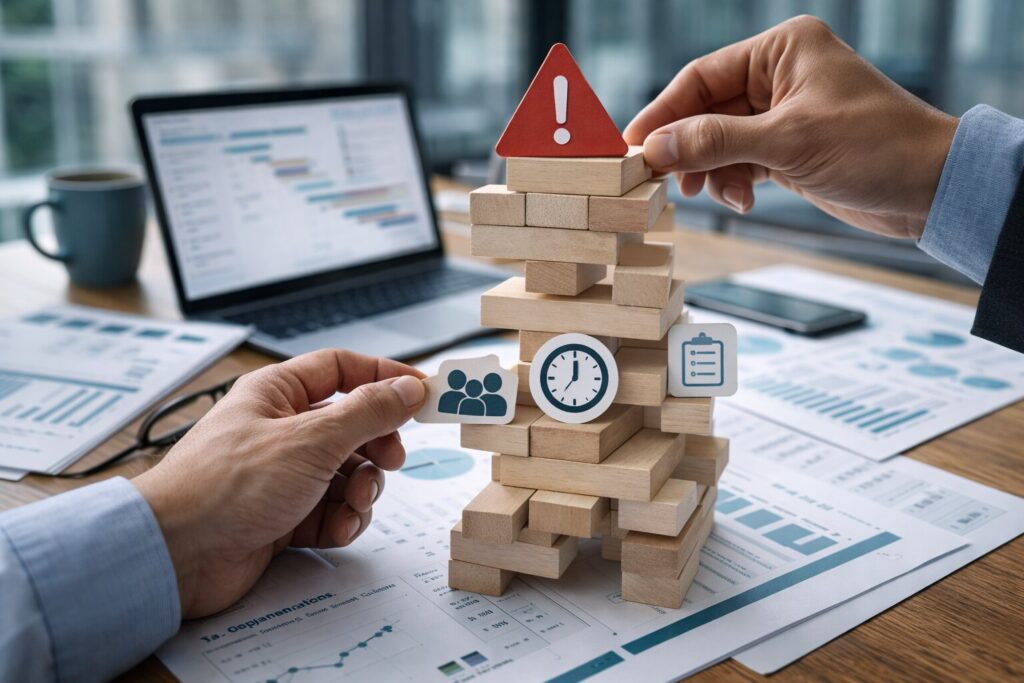
Every strategy depends on resources: people, capital, technology, data, suppliers, and time. Yet many organizations focus heavily on market or financial risk while underestimating the vulnerabilities embedded in their resource base. Resource risk refers to the possibility that critical inputs become unavailable, insufficient, misaligned, or unreliable. When unmanaged, it disrupts delivery, erodes margins, and weakens competitive position. When addressed proactively, it becomes a source of resilience and strategic advantage.
In short:
Resource risk arises when essential inputs are unavailable, misaligned, or unstable.
It spans human capital, financial resources, technology, suppliers, and capacity.
Early identification and scenario analysis reduce disruption.
Governance and cross-functional visibility strengthen mitigation efforts.
Resilient organizations treat resource risk as a strategic, not operational, concern.
What resource risk actually means
Resource risk is broader than simple shortages. It includes capacity constraints, skill gaps, supplier instability, funding volatility, and technological obsolescence. In project environments, resource risk often manifests as delays due to unavailable expertise. In operational contexts, it may appear as dependency on a single vendor.
The defining feature is vulnerability within the resource layer of the organization. If a key input fails, performance deteriorates. Unlike external market shocks, resource risk often develops internally and gradually.
Understanding its multidimensional nature is the first step toward effective management. Treating it narrowly as staffing risk or procurement risk limits visibility.
Categories of resource risk
To manage resource risk systematically, it helps to categorize it. Human capital risk includes talent shortages, turnover, and insufficient skill depth. Financial resource risk involves funding gaps or cash flow instability.
Operational resource risk may relate to equipment breakdowns or infrastructure limitations. Supplier risk emerges from reliance on external partners with limited redundancy. Technological resource risk includes system failures and cybersecurity vulnerabilities.
Segmenting risk by category clarifies accountability and supports targeted mitigation strategies. Each type requires different monitoring indicators and response mechanisms.
Also interesting


Identifying early signals of resource risk
Many organizations react only when disruptions become visible. A more advanced approach identifies early warning signals. Rising overtime hours may indicate capacity strain. Increasing reliance on contractors could signal structural skill gaps.
Supplier delivery inconsistencies may precede more serious breakdowns. Similarly, delayed investment in system upgrades can expose technological fragility.
Regular resource audits help surface these signals. Reviewing capacity utilization, turnover rates, and vendor performance metrics creates transparency. Proactive identification transforms resource risk from surprise to manageable variable.
Resource risk in project-based environments
Projects intensify resource risk because they depend on precise timing and coordination. A single unavailable specialist can delay an entire initiative. Resource conflicts between parallel projects amplify vulnerability.
Integrating resource risk analysis into project planning strengthens resilience. Before approval, leaders should assess whether required skills and capacity are realistically available. Sensitivity analysis can reveal how delays in one resource area affect overall timelines.
Organizations featured on TheGrowthIndex.com often highlight the importance of portfolio-level visibility. Without it, hidden interdependencies increase exposure.
Balancing efficiency and resilience
Lean operations prioritize efficiency and minimal redundancy. While cost-effective in stable conditions, excessive optimization increases resource risk. Systems operating at full capacity leave little margin for disruption.
Strategic buffers provide protection. Cross-training employees, maintaining secondary suppliers, or retaining financial reserves enhances flexibility. Although these measures introduce apparent inefficiency, they reduce long-term vulnerability.
The key lies in balance. Quantifying the cost of disruption versus the cost of redundancy supports informed trade-offs.
“Treat resource risk as a strategic signal, not an operational afterthought.”
Quantifying resource risk
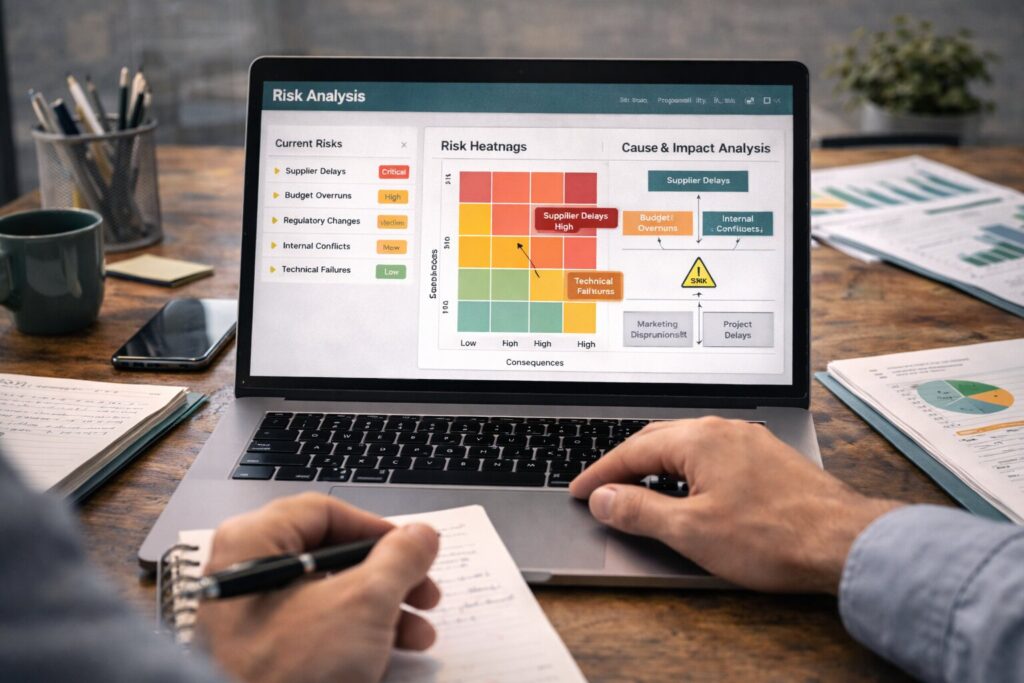
Unlike financial risk, resource risk is often qualitative. However, structured quantification improves clarity. Probability-impact matrices can assign risk scores to potential resource disruptions.
For example, losing a critical vendor with limited alternatives carries high impact and moderate probability. This assessment justifies mitigation investment. Conversely, a low-impact risk may require monitoring rather than immediate action.
Regular review cycles ensure that assessments remain current. As strategic priorities shift, resource exposure may evolve.
Governance structures that mitigate resource risk
Effective management of resource risk requires clear ownership. Responsibility should not be fragmented across departments without coordination. Central oversight mechanisms improve alignment.
Steering committees or risk boards can integrate resource considerations into strategic discussions. Cross-functional reporting ensures that emerging constraints are visible at leadership level.
Transparent escalation paths accelerate response. When issues are surfaced early, mitigation actions are more effective and less costly.
Supplier dependency and external resource risk
Globalized supply chains increase efficiency but also expose organizations to external shocks. Concentration risk, where critical inputs depend on a single supplier, amplifies vulnerability.
Diversifying suppliers reduces exposure but may increase complexity. Structured evaluation of supplier financial stability, geopolitical exposure, and operational resilience strengthens preparedness.
Long-term partnerships with clear performance standards create mutual accountability. Collaborative contingency planning further enhances resilience.
Also interesting



Talent strategy as a resource risk mitigator
Human capital remains one of the most significant sources of resource risk. Specialized knowledge concentrated in a few individuals creates bottlenecks and continuity threats.
Succession planning and knowledge transfer programs reduce dependency on single experts. Investing in continuous skill development builds internal depth.
Retention strategies also matter. High turnover increases operational instability. Proactive engagement initiatives and clear career pathways support workforce continuity.
Financial resource risk and capital discipline
Financial instability can constrain strategic flexibility. Insufficient liquidity limits the ability to respond to unexpected demands or opportunities.
Robust cash flow forecasting and diversified funding sources reduce exposure. Stress-testing financial models under adverse scenarios provides clarity on vulnerability thresholds.
Embedding financial resilience into planning aligns operational ambition with capital capacity.
Integrating resource risk into strategic planning
Resource risk should inform strategy rather than merely respond to it. Expansion plans, new product launches, or acquisitions all depend on resource availability.
Incorporating resource analysis into strategic reviews ensures feasibility. If a growth initiative requires scarce expertise, leadership must address this constraint proactively.
This integration transforms resource risk management into a forward-looking capability rather than a reactive safeguard.
Cultural awareness and transparency
Organizational culture influences how resource risk is perceived and communicated. If teams hesitate to report capacity strain or supplier instability, leadership remains unaware until disruption occurs.
Encouraging open communication fosters early identification. Leaders should reward transparency rather than penalize problem disclosure.
A culture of shared accountability strengthens collective resilience. Resource risk becomes a common concern rather than a departmental issue.
Continuous monitoring and adaptive response
Resource risk management is not a one-time exercise. Continuous monitoring ensures relevance. Dashboards tracking utilization rates, supplier reliability, and turnover trends provide ongoing insight.
Adaptive response mechanisms allow quick adjustment. Reallocating resources, activating contingency suppliers, or adjusting timelines reduces impact.
Over time, consistent monitoring builds organizational memory. Patterns of vulnerability become visible, informing long-term improvement.

Lina Mercer
Lina Mercer is a technology writer and strategic advisor with a passion for helping founders and professionals understand the forces shaping modern growth. She blends experience from the SaaS industry with a strong editorial background, making complex innovations accessible without losing depth. On TheGrowthIndex.com, Lina covers topics such as business intelligence, AI adoption, digital transformation, and the habits that enable sustainable long-term growth.