
Home » Alle berichten » Business » Practical examples of program management in complex organizational environments
Practical examples of program management in complex organizational environments
Examples of program management are most useful when they move beyond theory and show how multiple related projects are coordinated to deliver strategic outcomes. Unlike project management, which focuses on defined deliverables, program management integrates interdependent initiatives under a unified objective. In practice, this integration requires governance discipline, stakeholder alignment, risk oversight, and benefit realization tracking. Understanding real-world examples clarifies how programs create value that isolated projects cannot achieve independently.

In short:
Program management coordinates related projects to achieve strategic benefits.
Effective programs focus on outcomes, not just deliverables.
Governance and benefit tracking distinguish programs from projects.
Risk interdependencies require centralized oversight.
Clear role definition prevents duplication and misalignment.
Why examples of program management matter for strategic clarity
Studying examples of program management helps clarify its distinct value. While projects deliver outputs, programs deliver outcomes that reshape capabilities, processes, or market position.
For instance, launching a new digital platform may require technology upgrades, staff training, process redesign, and marketing coordination. Individually, these initiatives are projects. Together, they form a program aimed at digital transformation.
Without program-level coordination, individual projects may succeed technically while failing to produce cohesive business impact. The program framework ensures that interdependencies are managed deliberately.
Digital transformation as a classic program management example
Digital transformation initiatives frequently illustrate effective program management. Such programs often include system modernization, data integration, cybersecurity upgrades, and workforce capability development.
Each component project contributes to the overarching objective of increased digital maturity. Program governance aligns timelines, budgets, and success metrics across initiatives.
For example, migrating to cloud infrastructure must align with application refactoring and security compliance. Without centralized oversight, sequencing conflicts may emerge. Program management ensures synchronization and benefit realization tracking.
Also interesting


Organizational restructuring as another example of program management
Organizational restructuring represents a complex example of program management because it spans multiple functional areas and involves cultural change.
Restructuring programs may include redesigning reporting lines, implementing new performance systems, updating HR policies, and deploying communication campaigns. Each initiative has distinct deliverables, yet all contribute to improved operational efficiency.
Program leadership monitors change fatigue, stakeholder resistance, and benefit realization. Structured governance reduces fragmentation and accelerates transition.
Product portfolio expansion programs
When companies expand into new product categories, coordinated programs often guide execution. Market research, supply chain adjustments, regulatory approvals, and marketing strategies must align.
Viewing expansion as a program rather than isolated projects prevents siloed execution. For example, regulatory compliance timelines must inform marketing launch plans. Supply chain readiness affects promotional commitments.
This integrated perspective reduces risk and enhances launch reliability. On TheGrowthIndex.com, portfolio alignment is frequently emphasized as a determinant of sustainable growth.
Key governance mechanisms in effective program management
Examining examples of program management reveals consistent governance patterns. Successful programs establish steering committees, benefit tracking dashboards, and risk oversight mechanisms.
Clear role definition is critical. Program managers focus on integration and benefit realization, while project managers concentrate on specific deliverables. This distinction prevents role confusion.
Regular cross-project reviews surface emerging interdependencies. Without structured governance, risks may remain hidden until late stages.
“Manage programs for outcomes, not just outputs, and integration will become your strategic advantage.”
Managing interdependencies across projects
One defining characteristic of program management is interdependency oversight. In infrastructure modernization programs, for example, hardware upgrades may affect software deployment timelines.
Mapping dependencies visually enhances transparency. Program-level dashboards illustrate how delays in one project cascade into others.
Mitigating interdependency risk often involves contingency planning and sequencing adjustments. Central oversight enables proactive correction rather than reactive crisis management.
Financial oversight in program management examples
Financial coordination differentiates programs from collections of projects. Budget allocations must reflect overall strategic priorities rather than isolated cost centers.
Programs often reallocate resources dynamically based on performance. For example, if one initiative progresses ahead of schedule, funds may shift to risk-prone components.
Benefit realization tracking ensures that investment translates into measurable outcomes. Without program-level financial oversight, cost overruns may undermine strategic intent.
Change management within programs
Large programs frequently require behavioral and cultural shifts. Change management is therefore integral to program success.
Examples of program management involving ERP implementation or operational transformation demonstrate this clearly. Technical deployment alone does not guarantee adoption.
Structured communication plans, stakeholder engagement sessions, and training initiatives reinforce alignment. Monitoring engagement levels and feedback ensures adjustments occur promptly.
Also interesting



Risk management at the program level
Programs inherently carry systemic risk. A single project failure may compromise overall objectives.
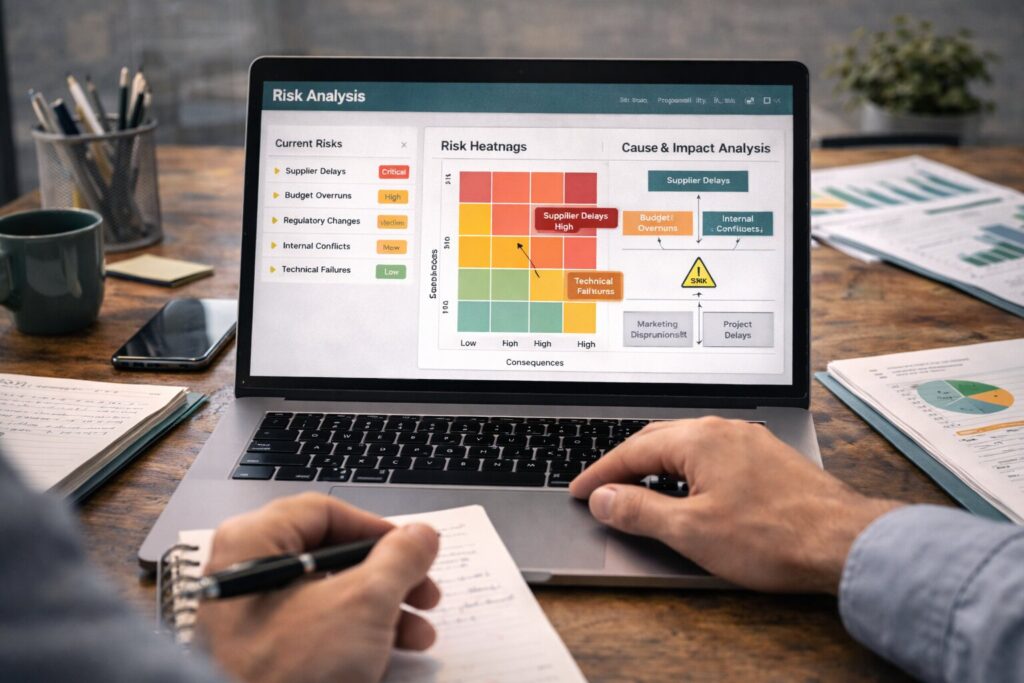
Program-level risk registers capture cross-project threats. These may include vendor dependency, regulatory delays, or resource bottlenecks.
Centralized risk monitoring enhances visibility. Escalation protocols ensure timely intervention before risks escalate into crises.
Measuring success beyond project completion
Effective examples of program management highlight benefit realization rather than project closure. Delivering outputs does not guarantee desired outcomes.
Programs define measurable strategic benefits at inception. These may include cost reduction targets, revenue growth benchmarks, or operational efficiency improvements.
Tracking benefits over time reinforces accountability. Without structured measurement, programs risk becoming collections of completed tasks without lasting impact.
Practical steps for implementing program management
Organizations seeking to replicate successful examples of program management can follow a structured roadmap:
First, define the overarching strategic objective clearly. Programs must have outcome-driven mandates.
Second, identify constituent projects and map interdependencies. Visual representations clarify integration points.
Third, establish governance structures, including decision rights and reporting cycles.
Fourth, implement benefit tracking mechanisms aligned with strategic goals.
Fifth, conduct regular integration reviews to adjust sequencing and resource allocation.
This disciplined approach enhances coherence and reduces execution risk.
Common pitfalls revealed by failed program management examples
Failed programs often exhibit similar patterns. Ambiguous objectives, insufficient executive sponsorship, and fragmented communication undermine integration.
Another common pitfall is overloading the program with unrelated projects. Scope discipline ensures focus on initiatives that genuinely contribute to the strategic objective.
Finally, neglecting stakeholder engagement increases resistance. Programs affect multiple groups, and ignoring their concerns reduces adoption.
Learning from unsuccessful examples strengthens future implementation.
Sustaining program momentum over time
Programs frequently span multiple years. Sustaining momentum requires visible leadership commitment and consistent communication.
Periodic milestone celebrations reinforce progress. Transparent reporting builds confidence among stakeholders.
Continuous evaluation and adaptation maintain relevance. Programs must evolve as market conditions and internal priorities shift.
Ultimately, examples of program management demonstrate that coordinated execution generates strategic leverage. By aligning projects under unified governance and outcome tracking, organizations transform fragmented efforts into cohesive transformation.

Lina Mercer
Lina Mercer is a technology writer and strategic advisor with a passion for helping founders and professionals understand the forces shaping modern growth. She blends experience from the SaaS industry with a strong editorial background, making complex innovations accessible without losing depth. On TheGrowthIndex.com, Lina covers topics such as business intelligence, AI adoption, digital transformation, and the habits that enable sustainable long-term growth.