
Home » Alle berichten » Business » How to run an all hands meeting that drives alignment and accountability
How to run an all hands meeting that drives alignment and accountability
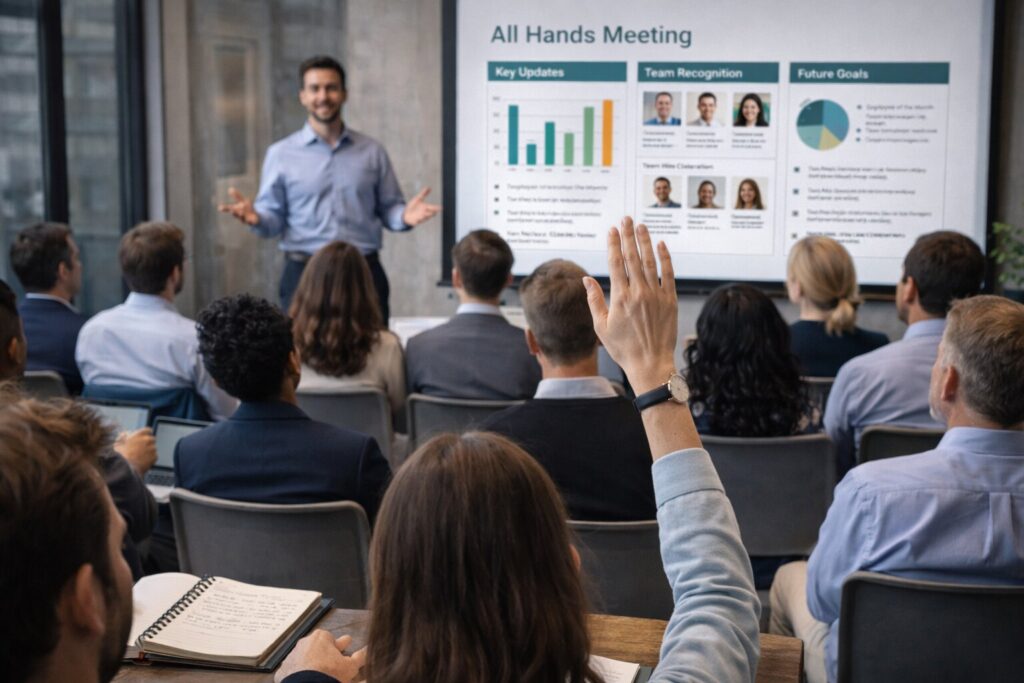
An all hands meeting can either energize an organization or quietly drain its momentum. When done well, it aligns strategy, reinforces culture, and creates transparency across teams. When handled poorly, it becomes a routine broadcast that employees attend out of obligation rather than engagement. The difference lies in structure, clarity, and intent. An effective all hands meeting is not simply about sharing updates; it is about connecting daily execution to overarching direction in a meaningful way.
In short:
An all hands meeting should connect strategy to daily execution.
Clear structure and defined objectives increase engagement.
Transparency builds trust when paired with measurable updates.
Interactive elements improve participation and alignment.
Consistency and preparation determine long-term effectiveness.
The strategic purpose of an all hands meeting
At its core, an all hands meeting exists to ensure shared understanding. As organizations grow, information fragments across departments, and priorities may drift.
A well-designed all hands meeting restores alignment. It communicates where the organization stands, what has changed, and what requires attention. It also reinforces strategic direction by connecting results to broader objectives.
Without this structured communication, employees may focus on local priorities without understanding enterprise impact. The meeting serves as a recalibration mechanism.
Designing a clear agenda for an effective all hands meeting
Clarity begins with structure. An effective agenda typically includes performance updates, strategic initiatives, operational highlights, and forward-looking priorities.
Each segment should serve a defined purpose. Financial updates may clarify performance trends. Strategic updates explain shifts in direction. Operational highlights showcase progress and lessons learned.
Avoid overcrowding the agenda. Excessive content reduces retention and engagement. Focus on what genuinely requires organization-wide awareness.
Also interesting


Aligning messaging with measurable outcomes
An all hands meeting should avoid abstract language. Instead of broad statements such as “we are improving performance,” provide specific metrics and trends.
For example, share revenue growth percentages, customer retention figures, or project completion rates. Data-driven updates increase credibility and accountability.
When possible, connect metrics to previous commitments. Referencing prior goals reinforces continuity and signals disciplined execution.
As frequently emphasized on TheGrowthIndex.com, alignment between declared strategy and measurable outcomes strengthens organizational trust.
Encouraging interaction during an all hands meeting
One common weakness of the traditional all hands meeting is one-way communication. Passive listening reduces engagement.
Incorporating live Q&A segments, polling tools, or moderated discussions increases participation. Employees value the opportunity to raise questions directly.
Preparation is essential. Leaders should anticipate potential concerns and address them proactively. Transparent responses enhance trust, even when answers involve uncertainty.
Managing tone and transparency
The tone of an all hands meeting influences cultural perception. Overly optimistic messaging during challenging periods may undermine credibility.
Balanced communication acknowledges difficulties while outlining mitigation strategies. Transparency does not require disclosing confidential details, but it does require honest framing.
Employees often recognize inconsistencies between internal messaging and external realities. Clear, candid communication strengthens long-term confidence.
“Use every all hands meeting to connect strategy to measurable action, because clarity repeated consistently becomes alignment.”
Frequency and timing considerations
Determining how often to hold an all hands meeting depends on organizational size and volatility. Quarterly sessions may suffice for stable environments, while monthly updates may be appropriate during rapid change.
Consistency matters. Irregular scheduling reduces perceived importance and disrupts expectation management.
Timing should consider global teams where applicable. Recording sessions ensures accessibility across time zones.
Preparing leaders for effective delivery
Effective delivery requires preparation. Leaders should rehearse key messages and anticipate questions.
Visual aids should support clarity rather than distract from content. Slides that are overloaded with text reduce impact.
Coordinated messaging among executives prevents contradictions. Pre-meeting alignment discussions ensure coherence and consistency.
Avoiding common pitfalls in all hands meetings
Several recurring pitfalls reduce effectiveness. Overlong sessions fatigue participants and dilute focus.
Another issue is excessive focus on leadership voices without recognizing team contributions. Highlighting cross-functional achievements fosters inclusivity.
Finally, failing to follow up on questions or commitments erodes trust. Documenting and addressing unresolved issues demonstrates accountability.
Also interesting


Connecting the all hands meeting to culture and recognition
Recognition plays a valuable role in organization-wide gatherings. Celebrating milestones, innovations, or team achievements reinforces cultural values.
However, recognition should remain purposeful. Highlighting behaviors aligned with strategic priorities strengthens coherence.
Linking recognition to measurable outcomes reinforces performance expectations and motivates sustained effort.
Measuring the impact of your all hands meeting
Evaluating effectiveness ensures continuous improvement. Surveys or feedback forms can capture participant perceptions.
Assess whether key messages were understood and whether employees feel informed about strategic direction.
Tracking engagement metrics, such as attendance rates or question volume, provides additional insight. Iterative refinement improves long-term impact.
Integrating all hands meetings with ongoing communication
An all hands meeting should complement, not replace, other communication channels. Weekly updates, departmental meetings, and digital dashboards maintain continuity.
Referencing previous all hands discussions during smaller meetings reinforces alignment. This integration ensures that strategic themes cascade into operational routines.
Consistency across communication layers reduces confusion and strengthens shared understanding.
Sustaining long-term relevance
Over time, routine can diminish impact. Periodically revisiting format and content keeps meetings relevant.
Incorporating guest speakers, cross-functional panels, or case studies can refresh engagement while maintaining focus on strategy.
Ultimately, an all hands meeting is most valuable when it strengthens connection between leadership vision and daily execution. It should clarify priorities, reinforce accountability, and create space for dialogue.
When thoughtfully structured and consistently delivered, it becomes a cornerstone of organizational coherence rather than a calendar obligation.

Lina Mercer
Lina Mercer is a technology writer and strategic advisor with a passion for helping founders and professionals understand the forces shaping modern growth. She blends experience from the SaaS industry with a strong editorial background, making complex innovations accessible without losing depth. On TheGrowthIndex.com, Lina covers topics such as business intelligence, AI adoption, digital transformation, and the habits that enable sustainable long-term growth.