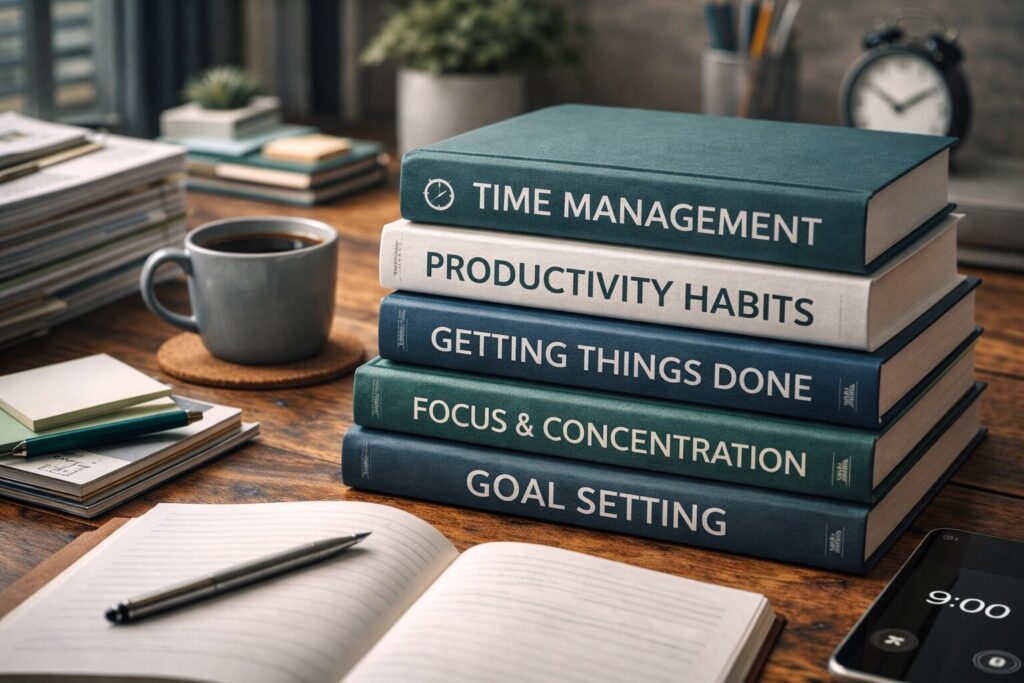
Building a personal productivity playbook
Reading multiple productivity books can create fragmented practices unless insights are synthesized. Creating a personal productivity playbook provides coherence.
This process involves identifying recurring principles across titles, such as clarity of goals, disciplined scheduling, and reflective review. These elements can be integrated into a unified framework tailored to specific operational realities.
Documenting personal systems—how tasks are captured, prioritized, executed, and reviewed—ensures consistency. When productivity methods are written and refined, they become deliberate rather than accidental.
Implementing structured review cycles
Many leading productivity frameworks emphasize regular review cycles. Weekly and quarterly reflections help recalibrate priorities and identify bottlenecks.
A structured review might include evaluating completed objectives, identifying unfinished tasks, assessing alignment with strategic goals, and adjusting upcoming priorities.
These cycles prevent drift. Without deliberate reflection, even well-designed systems degrade over time. Regular recalibration sustains momentum and clarity.
Scaling productivity principles across teams
While many productivity books focus on individual performance, their principles can extend to teams. Shared task visibility, clarified priorities, and synchronized planning sessions enhance collective efficiency.
However, scaling requires standardization. Teams benefit from common definitions of urgency, shared project tracking tools, and agreed-upon communication norms.
Embedding productivity principles into governance processes reduces reliance on individual discipline alone. This structural integration amplifies impact.
Long-term impact of the best productivity books
The most influential productivity books do not simply change daily habits; they reshape thinking about work itself. They challenge assumptions about busyness, redefine value creation, and encourage disciplined focus.
Their long-term impact depends on application consistency. Leaders who model productivity principles create cultural reinforcement. Over time, clarity and prioritization become embedded norms rather than temporary experiments.
Ultimately, productivity is not about doing more. It is about directing effort toward the most meaningful outcomes with sustained focus and disciplined execution.