
Home » Alle berichten » Business » Mastering demand and capacity planning for sustainable growth and operational resilience
Mastering demand and capacity planning for sustainable growth and operational resilience
Demand and capacity planning sit at the core of operational excellence. When demand consistently exceeds capacity, quality declines and teams burn out. When capacity significantly exceeds demand, margins erode and assets remain underutilized. Striking the right balance is not a one-time exercise but an ongoing strategic discipline. Organizations that treat demand and capacity planning as a leadership priority rather than a spreadsheet task build resilience, protect profitability, and improve execution reliability.

In short:
Demand and capacity planning align workload with available resources.
Accurate forecasting requires both data and contextual judgment.
Capacity must reflect real constraints, not theoretical availability.
Scenario modeling strengthens decision-making under uncertainty.
Continuous review prevents structural misalignment and costly surprises.
Why demand and capacity planning drive strategic stability
At its simplest, demand represents required output, while capacity reflects the ability to deliver that output within defined constraints. Yet in practice, both concepts are more complex.
Demand is rarely static. Market shifts, internal initiatives, and regulatory changes influence workload. Capacity is similarly fluid, affected by staffing levels, skill availability, process efficiency, and technological infrastructure.
When demand and capacity planning are disconnected from strategy, organizations oscillate between overextension and underperformance. Integrating planning into executive decision-making ensures that growth ambitions remain grounded in operational reality.
Understanding true capacity beyond headcount
A common mistake in demand and capacity planning is equating capacity with headcount. In reality, true capacity is shaped by multiple variables.
Skill distribution matters as much as the number of employees. A team of ten cannot deliver specialized output if only two members possess the required expertise. Similarly, administrative overhead, meetings, and compliance obligations reduce effective productive time.
Calculating realistic capacity involves accounting for non-project work, training time, and contingency buffers. Overestimating availability leads to systematic overcommitment and declining morale.
Also interesting


Forecasting demand with disciplined assumptions
Demand forecasting blends quantitative data and qualitative insight. Historical trends provide baseline patterns, but external factors often alter trajectories.
Effective demand and capacity planning incorporates leading indicators such as sales pipelines, contract renewals, and macroeconomic signals. Cross-functional input enhances accuracy by capturing market nuances that raw data may overlook.
Documenting assumptions behind forecasts increases transparency. When deviations occur, teams can identify whether demand changed or initial assumptions were flawed.
Identifying structural versus temporary imbalances
Imbalances between demand and capacity are not always problematic. Temporary surges may justify short-term overtime or external support. Structural imbalances require deeper intervention.
If demand persistently exceeds capacity, hiring, automation, or process redesign may be necessary. Conversely, sustained underutilization may indicate market misalignment or overexpansion.
Regular diagnostic reviews help distinguish cyclical fluctuations from systemic issues. Addressing root causes prevents recurring stress on teams and financial volatility.
Practical framework for demand and capacity planning
A structured approach enhances consistency. The following step-by-step framework supports disciplined execution:
First, quantify demand across defined time horizons. Break projections into monthly or quarterly segments to increase precision.
Second, calculate effective capacity, adjusting for realistic productivity rates and non-billable obligations.
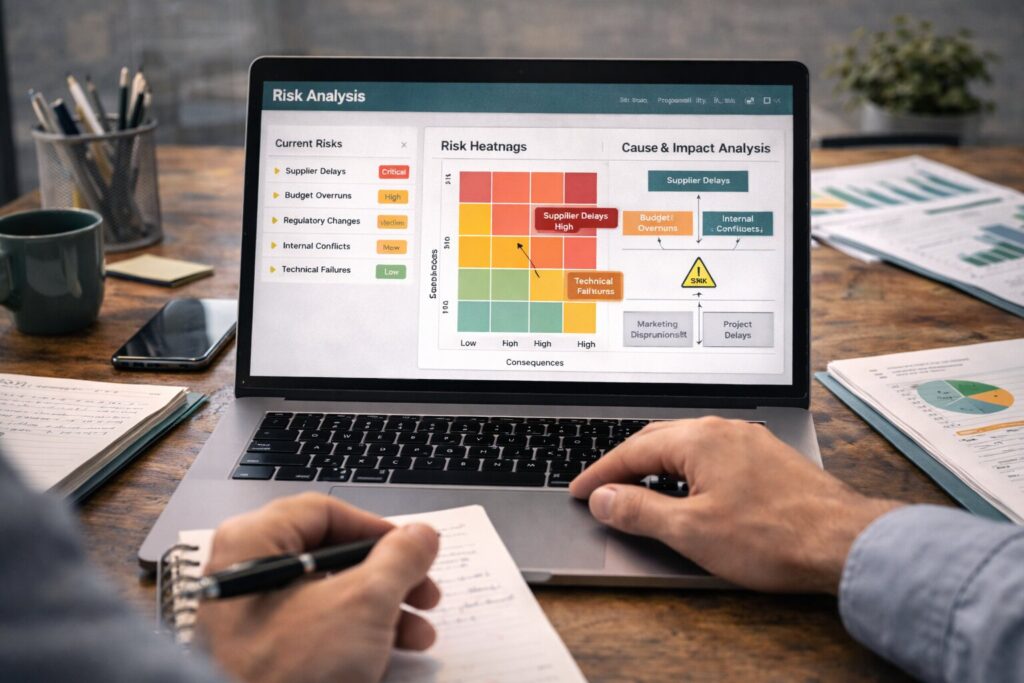
Third, compare demand and capacity visually. Heat maps or workload dashboards make imbalances immediately apparent.
Fourth, define corrective actions. These may include reprioritization, resource reallocation, hiring plans, or demand shaping initiatives.
Fifth, review and refine regularly. Planning should be iterative rather than annual.
Embedding this framework into governance rhythms increases agility and reliability.
“Balance ambition with realistic capacity, and growth will become sustainable rather than stressful.”
The role of prioritization in balancing demand and capacity
When demand exceeds capacity, prioritization becomes essential. Not all initiatives contribute equally to strategic objectives.
Establishing clear prioritization criteria—such as revenue impact, risk mitigation, or long-term capability development—guides trade-offs. Transparent decision rules reduce internal conflict.
Organizations that neglect prioritization often attempt to accommodate all requests, leading to diluted performance. Clear filters ensure that limited capacity is directed toward high-leverage outcomes.
Leveraging technology in demand and capacity planning
Digital tools enhance visibility and forecasting accuracy. Integrated platforms can consolidate workload data, staffing levels, and performance metrics in real time.
However, technology does not eliminate the need for judgment. Data may show capacity availability, but contextual factors—such as skill gaps or team fatigue—require qualitative interpretation.
Successful implementation combines system-generated insights with managerial experience. On TheGrowthIndex.com, this integration of analytics and leadership judgment is frequently highlighted as a differentiator in high-performing organizations.
Managing demand through strategic shaping
Demand is not always externally fixed. Organizations can influence it through scheduling, pricing, or service design.
For example, offering staggered delivery windows can smooth peak workloads. Incentivizing early commitments reduces last-minute surges. Adjusting pricing structures can discourage low-margin demand during capacity constraints.
Strategic demand shaping aligns external expectations with internal capabilities. This proactive stance reduces reactive firefighting and improves predictability.
Also interesting



Building resilience through scenario planning
Uncertainty is inevitable. Scenario planning strengthens demand and capacity planning by preparing for multiple potential futures.
Developing best-case, base-case, and downside scenarios allows organizations to test resource adequacy under varying conditions. This reduces vulnerability to sudden demand spikes or market contractions.
Scenario modeling also supports investment decisions. Expanding capacity may be justified under growth scenarios but imprudent under conservative projections. Structured analysis clarifies trade-offs.
Aligning financial planning with capacity realities
Financial projections often assume smooth execution. However, without capacity alignment, revenue targets may become aspirational rather than achievable.
Integrating demand and capacity planning into budgeting processes enhances credibility. Revenue forecasts should reflect realistic delivery capability, not theoretical potential.
This alignment protects margins and reputation. Overpromising and underdelivering erodes trust, while disciplined forecasting reinforces reliability.
Addressing human factors in capacity planning
Capacity is not solely a technical calculation. Human factors significantly influence output quality and sustainability.
Chronic overload leads to fatigue, reduced engagement, and higher turnover risk. Conversely, persistent underutilization can decrease motivation and skill development.
Balancing workload intensity with recovery periods strengthens long-term performance. Monitoring engagement levels alongside capacity metrics provides early warning signals.
Continuous improvement and feedback loops
Demand and capacity planning should evolve with experience. Post-cycle reviews reveal forecasting accuracy, estimation bias, and operational bottlenecks.
Analyzing variance between projected and actual workloads identifies systematic gaps. Continuous refinement increases planning reliability over time.
Embedding feedback loops into management routines transforms planning from static forecasting into dynamic capability development.
Ultimately, demand and capacity planning is not merely an operational exercise. It is a strategic discipline that shapes profitability, resilience, and organizational health. When grounded in realistic assumptions, supported by data, and reinforced by governance structures, it becomes a foundation for sustainable growth.

Lina Mercer
Lina Mercer is a technology writer and strategic advisor with a passion for helping founders and professionals understand the forces shaping modern growth. She blends experience from the SaaS industry with a strong editorial background, making complex innovations accessible without losing depth. On TheGrowthIndex.com, Lina covers topics such as business intelligence, AI adoption, digital transformation, and the habits that enable sustainable long-term growth.