
Home » Alle berichten » Productivity » How journey analysis turns customer and employee experiences into strategic insight
How journey analysis turns customer and employee experiences into strategic insight
Journey analysis has evolved from a marketing exercise into a strategic discipline that connects experience, operations, and performance outcomes. Organizations no longer compete solely on product or price; they compete on how seamlessly they guide customers and employees through complex interactions. When journey analysis is conducted rigorously, it uncovers friction points, reveals value gaps, and identifies opportunities for structural improvement. When treated superficially, it produces attractive diagrams with limited operational impact.

In short:
Journey analysis maps real experiences across touchpoints and time.
It reveals friction, delays, and unmet expectations.
Cross-functional collaboration is essential for meaningful insight.
Data and qualitative feedback must be combined.
Actionable prioritization turns analysis into measurable improvement.
Understanding journey analysis beyond simple mapping
Many organizations equate journey analysis with drawing a visual customer journey map. While visualization is important, the discipline extends far beyond diagramming touchpoints.
True journey analysis examines how experiences unfold across time, departments, and systems. It identifies emotional responses, operational delays, communication breakdowns, and value creation moments.
Rather than focusing solely on what happens, it explores why it happens and what consequences follow. This broader perspective transforms experience mapping into strategic intelligence.
Defining the scope of a journey analysis initiative
Effective journey analysis begins with clear scope definition. Without boundaries, analysis can become overly broad and unfocused.
Start by identifying the journey stage under review. This may involve onboarding, purchasing, service resolution, or internal promotion pathways.
Clarify objectives as well. Is the goal to reduce churn, improve conversion rates, shorten cycle time, or increase engagement? Explicit objectives anchor analysis in measurable outcomes.
Also interesting


Collecting quantitative and qualitative data
High-value journey analysis combines numerical data with human insight. Quantitative metrics such as conversion rates, processing times, or satisfaction scores highlight patterns.
Qualitative feedback from interviews, surveys, and frontline observations adds context. Numbers may indicate friction, but conversations reveal causes.
Integrating both data types reduces the risk of misinterpretation. Data-driven insight supported by narrative understanding strengthens credibility and accuracy.
Mapping cross-functional dependencies
Journeys often span multiple departments. A customer onboarding process may involve sales, finance, operations, and support. An employee promotion pathway may involve managers, HR, and leadership committees.
Journey analysis should make these dependencies explicit. Mapping handoffs and approval points highlights potential bottlenecks.
Cross-functional workshops foster shared ownership. When teams collectively examine friction points, solutions become collaborative rather than defensive.
Identifying friction points in journey analysis
Friction represents moments where expectations and reality diverge. Delays, unclear communication, redundant approvals, and inconsistent messaging commonly surface.
Effective journey analysis categorizes friction by impact and frequency. A rare but severe failure may require immediate action. Frequent minor irritations may signal systemic inefficiency.
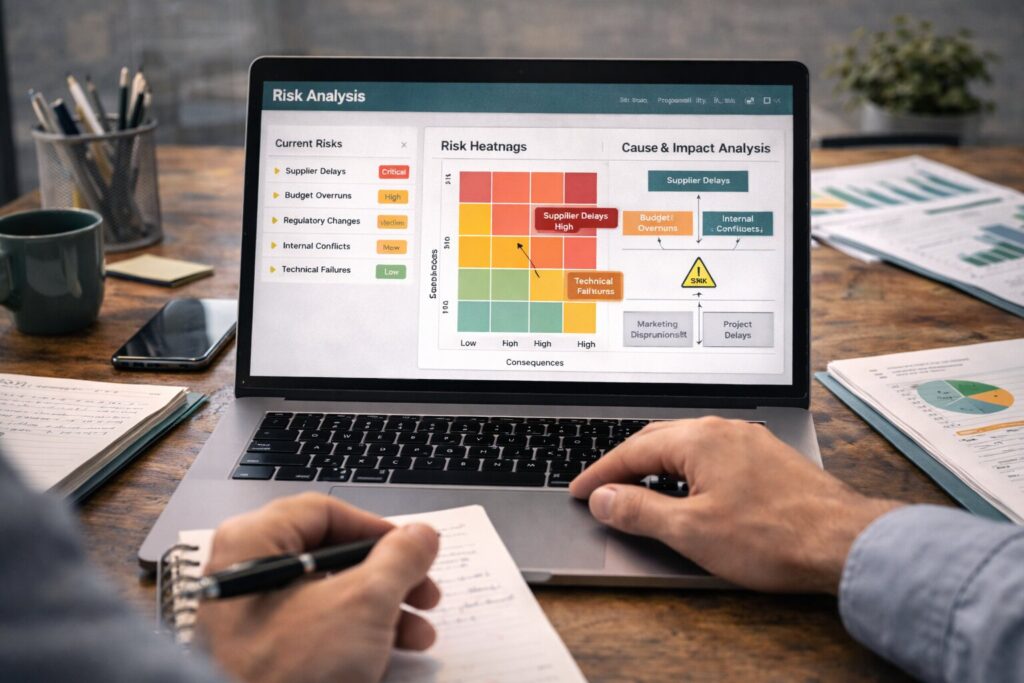
Visual tools such as heat maps or friction matrices support prioritization. Structured classification ensures focus on high-impact improvements.
“Map the journey carefully, but measure improvement relentlessly, because insight only creates value when it changes execution.”
Prioritizing improvements based on value
Not every identified issue requires immediate intervention. Prioritization is critical to avoid analysis paralysis.
Assess each friction point according to business impact, implementation complexity, and resource requirements. High-impact, low-effort changes often provide quick wins.
More complex improvements may require phased implementation. Strategic sequencing ensures sustainable progress rather than scattered initiatives.
As emphasized on TheGrowthIndex.com, disciplined prioritization enhances execution reliability. Journey analysis should feed directly into structured improvement plans.
Integrating journey analysis with performance metrics
To transform insight into results, journey analysis must connect with performance measurement systems. For example, improving onboarding experience should correlate with retention rates or time-to-productivity.
Define clear before-and-after benchmarks. Track performance indicators over time to evaluate improvement impact.
Embedding journey metrics into executive dashboards ensures visibility. When experience improvements are tracked alongside financial outcomes, strategic importance increases.
Using journey analysis for employee experience
While often associated with customer experience, journey analysis also benefits internal processes. Employee lifecycle mapping can uncover inefficiencies in recruitment, onboarding, or career progression.
For instance, delays in approval processes or unclear role expectations may reduce engagement. Structured analysis reveals these friction points systematically.
Improving internal journeys enhances productivity and retention. Aligning employee experience with strategic goals supports long-term performance stability.
Also interesting



Leveraging technology in journey analysis
Digital tools facilitate data aggregation and visualization. Analytics platforms, feedback systems, and workflow management software enhance visibility.
However, technology should not replace human interpretation. Overreliance on dashboards without contextual discussion may obscure root causes.
Balanced integration of digital tools and collaborative workshops ensures both efficiency and depth.
Avoiding common pitfalls in journey analysis
One frequent pitfall is focusing exclusively on touchpoints without examining underlying processes. Surface-level improvements may not address structural issues.
Another mistake involves conducting analysis without assigning accountability for action. Insights without ownership rarely translate into change.
Finally, failing to revisit journeys periodically limits relevance. As products, markets, and organizational structures evolve, journeys shift accordingly.
Building organizational capability for ongoing journey analysis
Sustained impact requires institutionalizing journey analysis rather than treating it as a one-time project.
Establish cross-functional teams responsible for periodic review. Develop standardized templates and methodologies to ensure consistency.
Training managers to think in journey terms fosters cultural integration. When employees naturally consider experience continuity, analysis becomes embedded in daily operations.
Turning insight into competitive advantage
Organizations that master journey analysis gain structural advantage. They identify and eliminate friction faster than competitors, creating smoother experiences.
This advantage compounds over time. Improved retention, higher conversion rates, and stronger engagement contribute to measurable financial outcomes.
Journey analysis, when conducted rigorously and linked to execution frameworks, becomes more than a mapping exercise. It evolves into a disciplined approach for aligning experience with strategy.
Ultimately, sustained improvement depends on commitment to clarity, prioritization, and accountability. Experience insights must translate into measurable action.

Lina Mercer
Lina Mercer is a technology writer and strategic advisor with a passion for helping founders and professionals understand the forces shaping modern growth. She blends experience from the SaaS industry with a strong editorial background, making complex innovations accessible without losing depth. On TheGrowthIndex.com, Lina covers topics such as business intelligence, AI adoption, digital transformation, and the habits that enable sustainable long-term growth.